Understanding sentence structure is an important part of mastering English grammar. One concept that often confuses learners is the predicate adjective. Although the term may sound complex, a predicate adjective is a common grammatical element that appears in everyday speech and writing. Learning how predicate adjectives work can improve sentence construction, enhance writing clarity, and strengthen grammar skills.
This article explains what a predicate adjective is, how it functions in a sentence, how it differs from other types of adjectives, and how to identify it correctly.
Definition of a Predicate Adjective
A predicate adjective is an adjective that follows a linking verb and describes the subject of the sentence. Instead of appearing directly before a noun, the adjective comes after the verb and provides information about the subject.
A predicate adjective completes the meaning of the sentence by telling us something about the subject.
Example:
The sky is blue.
In this sentence:
Subject: sky
Linking verb: is
Predicate adjective: blue
The adjective “blue” describes the subject “sky.” Since it appears after the linking verb “is,” it functions as a predicate adjective.
Why Is It Called a Predicate Adjective?
The term can be understood by examining its two parts:
Predicate: The part of a sentence that contains the verb and tells something about the subject.
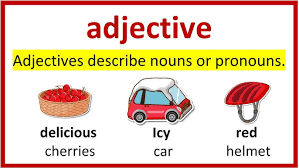
Adjective: A word that describes a noun or pronoun.
A predicate adjective is therefore an adjective that appears in the predicate and describes the subject.
Example:
The flowers are beautiful.
The predicate is “are beautiful,” and the adjective “beautiful” describes the subject “flowers.”
How Predicate Adjectives Work
Predicate adjectives work with linking verbs rather than action verbs. Their role is not to show an action but to provide additional information about the subject.
Example:
The soup tastes delicious.
Here:
Subject: soup
Linking verb: tastes
Predicate adjective: delicious
The adjective “delicious” describes the soup rather than modifying another noun.
Linking Verbs and Predicate Adjectives
Predicate adjectives almost always follow linking verbs. A linking verb connects the subject to a word that describes or identifies it.
Common linking verbs include:
am
is
are
was
were
be
being
been
become
seem
appear
look
feel
smell
sound
taste
remain
grow
stay
Examples:
The weather seems pleasant.
The child became tired.
The room looks clean.
The music sounds wonderful.
The milk smells sour.
In each sentence, the adjective after the linking verb describes the subject.
Examples of Predicate Adjectives
Here are several examples showing predicate adjectives in different contexts:
Example 1
The cat is sleepy.
Predicate adjective: sleepy
Example 2
The students were excited.
Predicate adjective: excited
Example 3
The road appears narrow.
Predicate adjective: narrow
Example 4
The cake tastes sweet.
Predicate adjective: sweet
Example 5
The teacher remained calm.
Predicate adjective: calm
In every example, the adjective describes the subject through a linking verb.
Predicate Adjective vs Attributive Adjective
One of the easiest ways to understand predicate adjectives is to compare them with attributive adjectives.
Attributive Adjective
An attributive adjective appears directly before the noun it modifies.
Examples:
A happy child
A large building
A bright star
Predicate Adjective
A predicate adjective appears after a linking verb.
Examples:
The child is happy.
The building is large.
The star is bright.
Notice that the adjectives are the same in both sets of examples. Their grammatical function changes depending on their position in the sentence.
Comparison Table
Attributive Adjective
Predicate Adjective
The red car.
The car is red.
A noisy classroom.
The classroom is noisy.
A cold drink.
The drink is cold.
A strong athlete.
The athlete is strong.
How to Identify a Predicate Adjective
Finding a predicate adjective becomes easier if you follow a simple process.
Step 1: Find the Subject
Identify who or what the sentence is about.
Example:
The dog seems friendly.
Subject: dog
Step 2: Find the Verb
Determine whether the verb is a linking verb.
Verb: seems
Step 3: Check the Word After the Verb
Ask whether the word describes the subject.
Word after verb: friendly
Since “friendly” describes the dog, it is a predicate adjective.
Predicate Adjective vs Predicate Nominative
Students often confuse predicate adjectives with predicate nominatives because both follow linking verbs.
Predicate Adjective
Describes the subject.
Example:
The water is cold.
“Cold” describes the water.
Predicate Nominative
Renames or identifies the subject.
Example:
Sarah is a doctor.
“Doctor” identifies Sarah rather than describing her.
Comparison
Sentence
Type
The sky is cloudy.
Predicate adjective
The sky is a mystery.
Predicate nominative
The child is energetic.
Predicate adjective
The child is a student.
Predicate nominative
A useful tip is to ask whether the word describes the subject or renames it.
Predicate Adjectives in Different Tenses
Predicate adjectives can appear in sentences with various verb tenses.
Present Tense
The room is quiet.
The students are ready.
Past Tense
The room was quiet.
The students were ready.
Future Tense
The room will be quiet.
The students will be ready.
Although the tense changes, the adjective continues to describe the subject.
Predicate Adjectives with Sensory Verbs
Certain sensory verbs frequently introduce predicate adjectives.
Look
The painting looks beautiful.
Sound
The plan sounds reasonable.
Smell
The roses smell wonderful.
Taste
The coffee tastes bitter.
Feel
The blanket feels soft.
In these examples, the verbs connect the subject to a descriptive adjective.
Predicate Adjectives with Compound Subjects
A predicate adjective may describe multiple subjects.
Example:
Tom and Jerry are funny.
The predicate adjective “funny” describes both Tom and Jerry.
Another Example:
The trees and flowers are colorful.
The adjective “colorful” applies to both subjects.
Predicate Adjectives with Compound Predicate Adjectives
Sometimes more than one predicate adjective describes the same subject.
Example:
The mountain is tall and majestic.
Predicate adjectives:
tall
majestic
Example:
The child seemed happy and confident.
Predicate adjectives:
happy
confident
Both adjectives provide information about the subject.
Predicate Adjectives in Questions
Predicate adjectives can also appear in questions.
Example:
Is the weather pleasant?
Predicate adjective: pleasant
Example:
Were the students prepared?
Predicate adjective: prepared
Even though the sentence structure changes, the adjective still describes the subject.
Predicate Adjectives in Negative Sentences
Negative sentences often contain predicate adjectives.
Example:
The movie was not interesting.
Predicate adjective: interesting
Example:
The solution is not simple.
Predicate adjective: simple
The presence of “not” does not change the adjective’s grammatical role.
Common Mistakes with Predicate Adjectives
Mistake 1: Confusing Action Verbs with Linking Verbs
Consider the sentence:
The athlete looked tired.
Here, “looked” functions as a linking verb, making “tired” a predicate adjective.
However:
The athlete looked at the crowd.
In this sentence, “looked” is an action verb, so there is no predicate adjective.
Mistake 2: Confusing Predicate Adjectives with Adverbs
Incorrect:
She feels badly.
Correct:
She feels bad.
After a linking verb, an adjective is generally needed because it describes the subject.
Mistake 3: Misidentifying Predicate Nominatives
Sentence:
My brother is an engineer.
“Engineer” is a noun, not an adjective. Therefore, it is a predicate nominative rather than a predicate adjective.
Practice Examples
Identify the predicate adjective in each sentence.
The sky became dark.
The children seem happy.
The soup tastes delicious.
The garden looks beautiful.
The athlete remained strong.
Answers:
dark
happy
delicious
beautiful
strong
Benefits of Understanding Predicate Adjectives
Learning about predicate adjectives provides several advantages:
Improved Grammar
You become better at recognizing sentence patterns and structures.
Better Writing
Understanding descriptive language helps create clearer and more effective sentences.
Stronger Editing Skills
You can identify grammatical mistakes more easily during proofreading.
Enhanced Reading Comprehension
Recognizing sentence components helps you understand complex texts more accurately.
Predicate Adjectives in Everyday Communication
Predicate adjectives appear constantly in daily conversations.
Examples include:
The food is amazing.
The weather is pleasant.
The meeting was productive.
The car seems reliable.
The children are energetic.
Because they are so common, understanding them can significantly improve both spoken and written English.
Summary
A predicate adjective is an adjective that follows a linking verb and describes the subject of a sentence. Unlike an attributive adjective, which appears directly before a noun, a predicate adjective comes after a linking verb such as “is,” “seem,” “become,” “feel,” or “look.”
For example, in the sentence “The sky is blue,” the word “blue” is a predicate adjective because it describes the subject “sky” through the linking verb “is.” Predicate adjectives can appear in statements, questions, negative sentences, and all verb tenses.
Understanding predicate adjectives helps learners recognize sentence patterns, distinguish between adjectives and nouns, and write more precise and grammatically correct English. By learning to identify linking verbs and determine whether a word describes the subject, anyone can quickly recognize predicate adjectives in everyday language.